← Back to the Worldview overview
WORLDVIEW 01

Script and lessons:
from forgetting to remembering

Some circumstances we cannot choose; how we respond, we can.

Script and lessons: from forgetting to remembering At the top is what we believe: everyone is whole to begin with, forgets a little along the way, and slowly remembers again; fast or slow, we get there, and slow does not mean behind. The script is the circumstances and lessons we meet along the way. In the middle: lessons come, but how you play them is yours. Below is what can be observed and practiced: what we cannot choose is the circumstance, what we can choose is how we respond; notice, choose a response, note it down, look back and adjust, round and round. Last is graduation: no longer needing this idea is fine too. The script is only for looking at your own path, not for explaining anyone else's pain. 1 What we believe Belief Whole as we began Forgetting along the way Remember slowly seeing ourselves fast slow Slow is not behind Fast or slow, it is your own timeline 2 Script situations and lessons met on the way Lessons come; how you play them is yours OBSERVE & PRACTICE Checkable Cannot choose circumstances, lessons 3 Can choose how we respond Notice Choose how to respond Note it Look back and adjust Slow is fine too Graduation: no longer needing this idea is fine too The script is only for looking at your own path, not for explaining anyone else's pain.

Slow does not mean behind;
how we respond can be practiced.

Each section ends with a small tag: Belief is how we see the world. It does not need to be, and cannot be, proven by science; Choice is what we have decided to do; Checkable is what can be looked at with data, and for the most part there are no results yet.

In the early-morning mist, sunlight breaks through behind the trees and lights the waterPhoto: Hans-Jurgen Mager / Unsplash
01 From forgetting to remembering

Each of us is whole to begin with,
we just forget a little along the way.

We believe everyone is whole to begin with. In living, we forget some of it; then, through experience, trying and feeling, we remember it bit by bit.

“Remembering” simply means coming, slowly, to understand who we were all along. In our way of speaking, this is a stretch of road the “soul” walks. By soul we mean the most central part of a person, the part that carries their own direction and intuition. This is our belief.

Each of us takes our own time to understand ourselves. Slow does not mean behind.

“Some people are fast, some are slow / but for each person the timing is just right”
Molly, personal notes, 2025-08-30
  • Belief
An empty old theatre, the curtain in front of the stage lit by warm golden lightPhoto: Liam McGarry / Unsplash
02 The script gives the lessons; the playing is yours

Lessons come,
how you play them is yours.

We use the word “script” to name a belief: along the way, a person meets certain circumstances and lessons. A lesson is something that keeps coming back and asks you to learn to face it.

This does not mean everything is already arranged and effort is pointless; nor that everything is up to you and enough effort changes it all. We believe in a third way: the lessons will come, but how you respond decides what the experience finally becomes.

“The script decides which lessons you will meet / but how you play it / decides the texture of the story in the end.”
Molly, personal Threads account, 2026-06-07

The “script” is only for looking at the road you have walked yourself. We do not use it to explain other people's pain or loss.

  • Belief
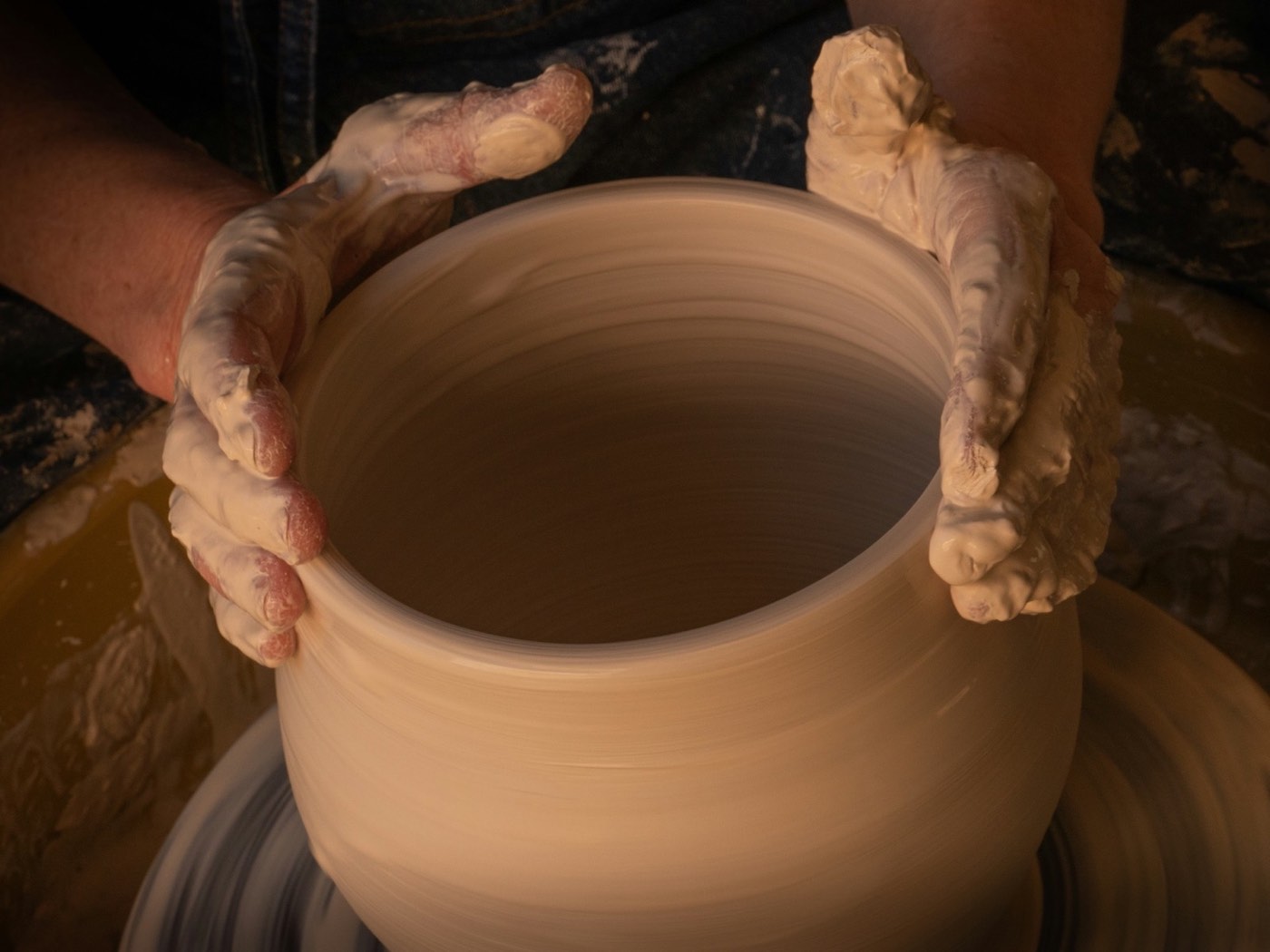
A pair of clay-covered hands steadying a pot as it turns on a potter's wheelPhoto: Earl Wilcox / Unsplash
03 How we respond can be practiced

The way you respond
can be practiced, and can be written down.

The script is a belief; you may believe it or not. But “how you respond” can be seen: when the same kind of situation comes again, what you said, what you did, what your body felt can all be written down and looked at again after a while.

Each step of this practice has psychology research behind it:

  • Notice and name it: Put what you feel into words. In experiments, naming the emotion one sees was linked to lower activity in the amygdala, a brain region involved in emotional reactions.Lieberman, M. D., Eisenberger, N. I., Crockett, M. J., Tom, S. M., Pfeifer, J. H., & Way, B. M. (2007). Putting feelings into words: Affect labeling disrupts amygdala activity in response to affective stimuli. Psychological Science, 18(5), 421–428. doi.org/10.1111/j.1467-9280.2007.01916.x
  • Choose how to respond: Looking at the same event from another angle is called cognitive reappraisal. People who habitually regulate emotions this way tend, on average, to report more positive emotion and better relationships (an observed association, not proof of cause).Gross, J. J., & John, O. P. (2003). Individual differences in two emotion regulation processes: Implications for affect, relationships, and well-being. Journal of Personality and Social Psychology, 85(2), 348–362. doi.org/10.1037/0022-3514.85.2.348
  • Look back and adjust: Looking back on your own experience like an observer helps you make sense of what happened, with less risk of being overwhelmed.Kross, E., & Ayduk, O. (2011). Making meaning out of negative experiences by self-distancing. Current Directions in Psychological Science, 20(3), 187–191. doi.org/10.1177/0963721411408883

“Scripts” are our belief; this loop of practice is a method. The research supports the method; we don't use it to prove the belief.

You do not have to wait until you can't cope to begin, and you do not have to get it right the first time. Practicing slowly is fine. The day you no longer need the word “script”, or us, that is graduation.

Want to try? The “self-awareness sheet” in the free resources lets you record your mood, stamina and actions each day. Take a look →
  • Checkable
  • Choice
Belief, and what can be checked

Two things, kept apart

Belief | what we believe

  • We believe everyone is whole to begin with, and that life is a road from forgetting to remembering.
  • We believe some circumstances and lessons are ones a person will meet along the way; we call this the “script”.
  • None of this needs to be, or can be, proved by science. You are free to disagree.

What can be checked

  • How you respond when the same kind of situation comes up: you can record it and compare it later.
  • Whether the conversation and result that follow are different after you respond another way: you can observe this yourself.
  • Whether these practices work for people who have never heard of us, and whether they can be completed without anyone leading: we are still checking, and draw no conclusion for now.

We do not use what can be checked to prove what we believe.

These are Molly's personal observations and beliefs,
not research conclusions.